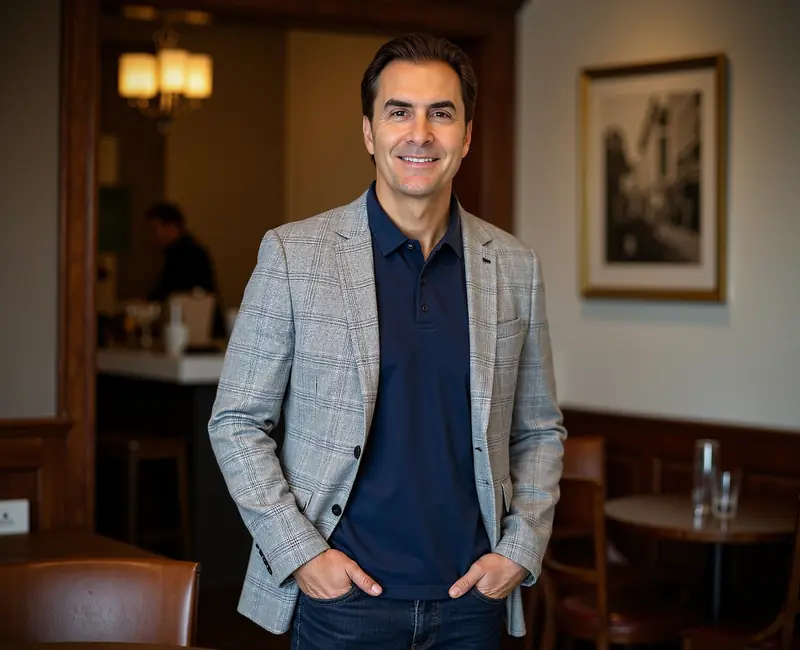
If you want an AI keynote speaker who is also a CISO, you are not asking for a nicer resume. You are asking for someone who has owned the decision when it was their job on the line. Most AI speakers explain the technology. A speaker who has been a Chief Information Security Officer has approved the budget, signed the disclosure, and answered to the board at 2 a.m. when the answer was not ready. That seat changes what your audience hears, because it changes what the speaker is willing to say.
Here is the short version. An AI keynote speaker who has been a CISO can connect three things most speakers keep separate. What the AI actually does. What it breaks when it fails. And who is accountable when it does. The audience does not get a demo. They get a decision framework from someone who has had to defend one.
Why the CISO seat matters more in 2026, not less
AI moved from the lab to the org chart, and the risk moved with it. The 2025 IBM Cost of a Data Breach report puts the global average breach at $4.44 million, down from $4.88 million the year before. Good news, until you read the U.S. line. The average U.S. breach hit a record $10.22 million, up 9 percent (IBM, 2025). Costs are not falling for American companies. They are climbing.
Now add accountability. Gartner predicted that by 2027, two-thirds of Global 100 organizations will extend directors and officers insurance to their cybersecurity leaders, because personal legal exposure is rising (Gartner, 2024). That prediction did not come from nowhere. The SEC charged SolarWinds and its CISO, Timothy Brown, individually, the first time it had named a CISO that way. A federal court dismissed the bulk of the case in July 2024, and the SEC dropped the rest with prejudice in November 2025 (Skadden, 2024). The charges did not stick. The message did. The person who signs the security posture can be named.
This is the world your audience lives in. They are deploying AI faster than they can govern it, the breach math is getting worse in the U.S., and the people responsible can be held personally liable. A speaker who has never carried that weight will tell them AI is important. A speaker who has carried it will tell them what to do on Monday, and what happens if they get it wrong.
What a CISO who speaks on AI actually covers
The difference shows up in the content. A former CISO does not open with the model. They open with the decision the model forces.
Where AI breaks first, and who notices
Not the headline risk. The quiet one. Shadow AI tools employees already pasted company data into, the agent with standing access nobody approved, the vendor model in the supply chain. A CISO has hunted these.
The governance that survives contact
Most AI governance is a policy nobody in the building has read. A CISO can tell the difference between a control that works and a slide that looks like one.
What the board should ask, in board language
The CISO has translated technical risk into business risk for a board, repeatedly. That is the skill your executives need, and most speakers cannot model it.
The 72-hour reality
When the AI does something nobody approved, the clock starts. A CISO has run that clock. The audience learns the decisions before the alert, not after.
That last point is where Mark Lynd's work lives. Across more than 200 executive tabletop exercises, the same thing breaks every time. The plan reads fine and does not survive the first hour. The teams that do fine practiced the argument, not the document. That is a finding from the chair, not the classroom.
CISO speaker versus AI speaker versus the bureau list
Most program chairs are choosing from three options without naming them. Here is the honest comparison.
| Researcher / analyst | Tech evangelist | CISO who speaks on AI | |
|---|---|---|---|
| Knows the technology | Yes | Yes | Yes |
| Has owned the risk | No | No | Yes |
| Can brief a board | Sometimes | Rarely | Yes, has done it |
| Talks about accountability | In theory | Avoids it | From experience |
| Audience leaves with | Awareness | Excitement | A decision and the steps |
Awareness and excitement have their place. But if your event is selling a keynote to executives who have to act, the gap in that last row is the whole point. The CISO is the only one in the room who has been accountable for the answer.
How to book one, and what to ask first
Not every former CISO is a strong speaker, and not every AI speaker has the security background to back the claim. Three questions sort it fast.
- Have you held the CISO title, and for how many organizations. Operating reps matter. One tour is different from five.
- Where is your primary research. A speaker who cites their own data, not just other people's headlines, is citing the seat. Ask what they have run and what they found.
- Can you brief my board, not just my conference. The best CISO speakers do both, and the board session often books the next keynote.
If you are building a shortlist, start with the people who rank for both AI and cybersecurity, not one or the other. The overlap is small on purpose. Most names live in one lane.
The takeaway
An AI keynote speaker who is also a CISO is not a luxury hire. In a year when U.S. breach costs hit a record and the person responsible can be named, it is the closest thing to having your future incident in the room before it happens. Book the speaker who has sat in the chair. Your audience will not remember the slides. They will remember the one thing they changed when they got back.
Book Mark Lynd. Mark is a CISO keynote speaker and AI keynote speaker who has held the CISO title five times. For the convergence of AI and security risk, see his cybersecurity keynote speaker work. For the board-level version of the worst case, read Cyber War: One Scenario, written from the operator seat.