If you are responsible for booking an AI or cybersecurity keynote speaker in 2026, for a corporate conference, a board offsite, an industry summit, a customer event, or a government audience, the speaker you choose will define how your audience walks away. Pick the right one and your event will be talked about for a year. Pick the wrong one and the audience will quietly write you off as the chair who booked a futurist with no operating experience. This guide is the framework I would use if I were sitting in your seat.
The State of the AI and Cybersecurity Speaking Market in 2026
The market for AI and cybersecurity keynote speakers looks nothing like it did three years ago. Three structural shifts have changed who your audience expects on the main stage.
First, generative AI has fully crossed the line into enterprise production. The question in the boardroom is no longer "should we use AI?" It is "how do we govern the AI that is already running across thirty-plus business units, most of it stood up without our security team in the loop?" A speaker who is still warming up an audience with ChatGPT demos and a "the future is here" sizzle reel will lose the room inside the first ten minutes.
Second, AI-enabled cyber threats are mainstream. Deepfake-enabled wire-fraud attacks, prompt-injection compromises of agentic systems, model exfiltration from RAG pipelines, and adversarial attacks on safety classifiers are no longer hypothetical. They show up in incident response reports every week. Your audience knows this. They want a speaker who can talk about defense as confidently as they can talk about offense.
Third, board-level AI and cybersecurity literacy is still the single biggest unsolved problem in enterprise governance. Directors are being asked to govern technologies they have never operated. They want plain-English, decision-grade framing, not a slide deck full of acronyms. The expectation gap between what a 2024 keynote could get away with and what a 2026 keynote actually has to deliver is the widest it has been in a decade.
That is the market you are speaking into. The speaker you pick has to land at the intersection of three things: current-quarter relevance, dual-domain depth across AI and cybersecurity, and the operating credibility to be useful to a room full of decision-makers. The good news is that the audience knows the difference. The bad news is that they know it within ten minutes of the speaker walking on stage.
Why Most Event Organizers Struggle to Pick the Right Speaker
The reason this decision is so difficult is that the speaker market has three dominant archetypes, and each one has real strengths and real limits. Knowing which archetype you are looking at is half the battle.
Archetype 1: The Career Speaker
The career speaker has spent the last decade or more on stage. They are polished, they know how to read a room, they have a content engine behind them, and they can deliver a keynote in any city in the world without breaking a sweat. The limit is freshness. The further away a speaker gets from current operating work, the more their content drifts toward the same set of stories they were telling three years ago. For an AI keynote in 2026, that is a problem. AI moves on a quarterly cycle. A keynote built in 2023 is a museum piece.
Career speakers are not a bad choice for every event. For a kickoff session that needs energy, polish, and reliability, and where the substance can be carried by the panels and breakouts that follow, a strong career speaker is often the right pick. The mistake is assuming a career speaker will also be the right pick for a board offsite, a customer executive dinner, or a closed-door governance session where the substance has to carry the weight.
Archetype 2: The Analyst-Firm Speaker
The analyst-firm speaker comes from a research house. They have data, frameworks, and benchmarks behind them. They are excellent at landscape framing, what the market is doing, what categories are emerging, what spend patterns look like. The limit is depth at the level of how things actually run inside an enterprise. Analyst speakers rarely sit through an incident response, brief a board on a real breach, or own the AI risk register at an enterprise. That practitioner gap shows up in Q&A.
Analyst-firm speakers shine when the audience needs market context, vendor selection cycles, spend benchmarks, category definitions, technology adoption curves. They struggle when the audience asks "what would you actually do?" because the analyst job description does not require the analyst to have done it.
Archetype 3: The Single-Tenure Executive Speaker
The single-tenure executive comes from one well-known organization. They have a great story to tell about what worked there. The limit is generalizability. A single tour of duty at one company, even a famous one, is one data point. The audience usually wants pattern recognition across many organizations, sectors, and incidents.
Single-tenure executives are excellent for case-study sessions, where the audience explicitly wants to study one company's transformation. They are weaker for governance and strategy keynotes, because the lessons of one company do not always transfer to a different one.
None of these archetypes is wrong. Each is right for some events. The work is matching the archetype to the room. The best speaker portfolio for a multi-day event often includes one of each, a career speaker to open, an analyst speaker for the market framing session, a single-tenure executive for the case-study session, and a dual-domain practitioner for the closing strategy keynote.
The 12 Criteria for Evaluating an AI and Cybersecurity Keynote Speaker
The framework I use when I am asked to recommend a speaker for someone else's event has twelve criteria. Read through them and decide which three or four matter most for your specific audience. No speaker is a ten out of ten on every criterion. You are looking for the right shape of strength.
| # | Criterion | What It Means |
|---|---|---|
| 1 | Practitioner credibility | Is the speaker currently operating, advising, or running enterprise AI and cybersecurity work? Or are they ten years removed from the work? |
| 2 | Current-quarter relevance | Is their content built on this quarter's threat landscape, regulations, and AI capabilities, or last year's? |
| 3 | Dual-domain depth | Do they hold real depth in BOTH AI and cybersecurity, or are they a single-domain speaker trying to stretch into the other? |
| 4 | Customization depth | Will they rebuild the talk for your audience and your industry, or are they delivering the same deck they delivered last week? |
| 5 | Audience-size experience | Are they comfortable in a 30-person board retreat AND a 5,000-person main stage? Both formats demand different muscles. |
| 6 | Format flexibility | Can they deliver virtual, hybrid, and in-person at the same level of energy? |
| 7 | Industry fit | Have they done meaningful work in your sector, financial services, healthcare, manufacturing, public sector, education, energy, or are they bringing generic content? |
| 8 | Role fit | Are they calibrated to a board audience, a C-suite audience, or a technical audience? The three are not interchangeable. |
| 9 | Pre-event prep process | Do they offer real briefing calls with the chair, sponsors, and a sample of attendees? Or do they show up cold with stock slides? |
| 10 | On-stage delivery | Do they hold the room without leaning on theatrics or jargon? Watch a recent video, not the highlight reel. |
| 11 | Post-event engagement | Do they stay for the Q&A, do a hallway track, attend the VIP dinner, and follow up afterward? Or do they fly out before dessert? |
| 12 | Contracting cleanliness | Are travel, AV, recording rights, and last-minute substitutions handled professionally and in writing? This is where many bookings go sideways. |
Criterion 1: Practitioner Credibility
The single biggest predictor of whether your audience will respect a speaker is whether the speaker has recently run, advised, or governed the work they are talking about. A speaker who can say "I had this exact conversation with a CIO and CISO last week" carries a different weight than a speaker quoting a Gartner report. Look for someone whose calendar is full of current C-suite and board conversations, not just past ones.
The cleanest test for practitioner credibility is to ask: "In the last 30 days, how many enterprise C-suite or board conversations have you had about AI or cybersecurity?" A working practitioner will answer with a real number, somewhere between 10 and 50, and will not need to think about it. A career speaker, an analyst, or a single-tenure executive will hedge.
Criterion 2: Current-Quarter Relevance
AI is moving in quarterly waves. New model classes, new attack patterns, new regulations. Ask any candidate to walk you through three developments from the last 90 days that they think changed the enterprise AI conversation. If they have to stall, that is your answer.
The same test works on the cybersecurity side. The last 90 days have always produced enough major incidents, regulatory updates, or technique shifts that any working practitioner can speak fluently to them. A speaker who falls back on incidents from 18 months ago is signaling something about their preparation cadence.
Criterion 3: Dual-Domain Depth
The most-requested 2026 keynote format is AI + cybersecurity together. Most speakers are one or the other. A handful are both. Probe this directly. Ask the candidate to explain how they would brief a board on AI governance, then ask them to explain how they would brief the same board on ransomware readiness. The shape of the two answers will tell you whether you are getting one specialty stretched across two topics, or genuine dual depth.
The single-domain stretch is the most common form of misrepresentation in the speaker market right now. A cybersecurity speaker who has read a few AI books does not automatically become an AI speaker. An AI speaker who has read a few cyber books does not automatically become a cyber speaker. The audience can usually tell within fifteen minutes which direction the stretch is going.
Criterion 4: Customization Depth
Customization is the single criterion that separates a $20,000 keynote that the audience forgets from a $20,000 keynote that the audience quotes in a board meeting six months later. Ask: how many hours of pre-event preparation does the speaker invest? What inputs do they need from you? Will they review your prior board materials, attendee list, and the prior speakers on your stage?
The best practitioner speakers put 8 to 15 hours of preparation into a single hour-long keynote. They reread the conference agenda, study the attendee roster, request prior speaker decks, and rewrite their opening five minutes to land specifically in the room they are walking into. That is what customization actually looks like.
Criterion 5: Audience-Size Experience
A 30-person board retreat and a 3,000-person main stage are different skills. Some speakers are excellent at one and uncomfortable at the other. Match the candidate to the room. In small rooms, the speaker has to do more conversation work and less performance work. In large rooms, the opposite. The same speaker, on the same week, will often have to flex both muscles. Make sure your candidate has done that.
Criterion 6: Format Flexibility
Post-pandemic, most enterprise events are hybrid by default. The speaker has to deliver to the people in the room AND the people on the stream. Some speakers do not even acknowledge the camera. Verify this explicitly before booking. Watch a recent hybrid recording, not just an in-person recording. The hybrid format reveals immediately whether the speaker has adjusted to it.
Criterion 7: Industry Fit
A speaker who has worked deeply in financial services will not automatically resonate with a manufacturing audience. Ask for examples of comparable engagements. Ask for the names of references in your sector. The pattern of a candidate's last 12 engagements tells you more about their industry fit than the list of industries on their website.
Criterion 8: Role Fit
Three audiences sound the same on a registration list but behave very differently in a room. A board audience wants fiduciary and regulatory framing. A C-suite audience wants strategic and operational framing. A technical audience wants depth and credibility on the actual mechanics. The same speaker, with the same talk, can land all three audiences only if they have explicitly calibrated for each. Ask the candidate to describe how they would adjust the same 45-minute talk for each audience.
Criterion 9: Pre-Event Prep Process
The best speakers have a structured intake process. They will ask for: the audience profile, the three outcomes the chair is solving for, the prior session that immediately precedes the keynote, the prior keynote topics from the last two years, the AV setup, and the post-keynote follow-up. If the candidate does not ask any of these, that is your answer.
Criterion 10: On-Stage Delivery
Watch a recent unedited recording, not the sizzle reel. Look for: does the speaker actually hold the room when there is no music underneath, no transition cuts, and no laughter track? Do they handle a tough audience question without flinching? Does the substance hold up at 1.5x speed? A speaker whose content holds up at 1.5x with no music is a speaker who will hold up live.
Criterion 11: Post-Event Engagement
The post-keynote period is where speakers either earn referrals or leave a flat impression. The best speakers stay for Q&A, do a hallway track with attendees, attend the VIP dinner, accept a couple of short follow-up calls, and contribute a written follow-up note for the conference archive. Set this expectation in writing before contracting.
Criterion 12: Contracting Cleanliness
Travel logistics, AV requirements, recording rights, substitution clauses, force majeure language, sponsor mentions, and content review windows. Get all of it in writing before the deposit. The conference organizers who have the smoothest events are the ones who treat contracting as part of the speaker selection, not an afterthought.
20 Questions to Ask Any AI and Cybersecurity Speaker Before You Book
This is the question list I would hand to a chair who asked me to help vet a finalist. Send the list to the candidate ahead of a 30-minute call and watch which ones they handle confidently and which ones they dodge.
- How many enterprise C-suite or board AI and cybersecurity conversations have you had in the last 30 days?
- What three developments in the last 90 days do you think changed the enterprise AI conversation?
- What three developments in the last 90 days do you think changed the cybersecurity conversation?
- How would you brief a board of directors on AI governance in 15 minutes?
- How would you brief the same board on cybersecurity in 15 minutes?
- How do you handle a hostile or skeptical Q&A?
- What are your fees, and what is included? What is extra?
- What is your customization process? How many hours go into a single keynote?
- Can you walk me through your last three engagements in our industry?
- Who are three references I can call from those engagements?
- What is your virtual and hybrid delivery setup?
- What is your AV rider, and how flexible is it?
- Will you stay for Q&A, the VIP dinner, and a hallway track?
- What recording rights do you grant?
- What is your cancellation and substitution policy?
- Have you ever pulled out of an engagement at short notice? Why?
- What was your worst keynote experience, and what did you learn?
- What would I be missing if I booked one of your competitors instead?
- What is the one thing about your fee that I should push back on?
- What is the one thing about your topic that you think is overhyped right now?
The candidates who handle the last two questions with confidence and a sense of humor are usually the ones who will hold your room. Watch closely for the candidate's reaction to question 16, "have you ever pulled out of an engagement at short notice?", because the answer, and the way it is delivered, tells you whether the candidate treats commitments as commitments or as renegotiable preferences.
Red Flags That Should Disqualify a Speaker
Some signals are not soft warnings. They are reasons to walk away.
Red Flag 1: The Sizzle Reel Is From 2022
If the most recent video on the speaker's site predates the current model generation, the keynote is going to feel dated. AI moves fast. So should the speaker's video archive. The simple test: scroll through the speaker's site looking for any indication of when their most recent footage was shot. If there is no date, that is itself a signal.
Red Flag 2: They Refuse a Pre-Event Briefing Call
This is almost always a sign that the candidate intends to deliver the same talk they delivered last week. A speaker confident in their preparation welcomes the briefing call because it is where their best content gets sharpened. A speaker who has nothing to sharpen avoids the call. Walk away.
Red Flag 3: They Cannot Name a Single Reference in Your Sector
If a candidate is being positioned as an industry expert but cannot produce a single reference call in your industry from the last 12 months, the positioning is overstated. Confidentiality concerns are real, but a real practitioner can always produce some form of reference, a chair from a past event, a fellow speaker, or a sponsor who can confirm the engagement happened and went well.
Red Flag 4: Vague Fee Structures
A real speaker has a real fee range and is willing to put it in writing. Vague answers about pricing usually mean the candidate is feeling out what your budget is, not what their work is worth. The fee structure should include the keynote, the customization time, the travel approach, the AV requirements, and the post-event deliverables in clear line items.
Red Flag 5: A History of Last-Minute Substitutions
Ask any candidate point blank if they have ever substituted out of an engagement after contracting. Some substitutions are unavoidable. A pattern is a problem. The way the candidate handles the question is as informative as the answer itself.
Red Flag 6: They Cannot Answer Industry-Specific Questions
If your audience is financial services and the candidate cannot speak fluently about SR 11-7, AI model risk, the SEC cyber disclosure rule, or the NYDFS Part 500 update, the industry fit is not there. If your audience is healthcare and the candidate cannot speak fluently about HIPAA enforcement trends, the HHS cybersecurity performance goals, or AI in clinical decision support, the same gap exists.
Red Flag 7: They Will Not Take Hard Questions Live
A candidate who wants Q&A to be moderated and pre-screened is signaling that they do not trust their own depth. The best speakers welcome unfiltered Q&A. The very best speakers ask for it explicitly and treat the Q&A as the highest-value portion of the engagement.
When to Choose Mark Lynd
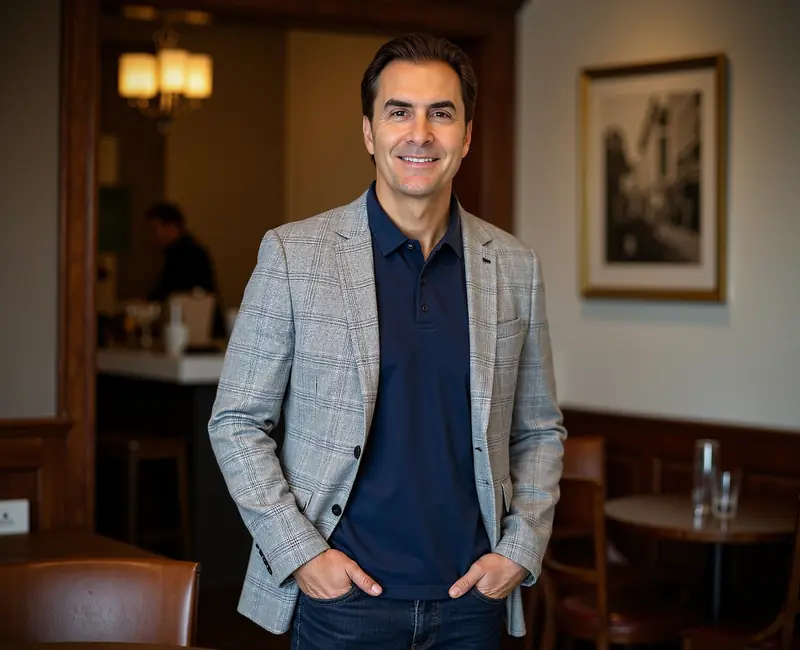
Mark Lynd is an active C-suite practitioner currently advising enterprise leaders every week through his role as Head of Executive Advisory and Strategy at Netsync. He is a 5x CIO and CISO and a Top 5 global thought leader in both AI and cybersecurity per Thinkers360, one of a very small number of speakers ranked in the global top tier in both domains. He keynotes board retreats, executive offsites, industry conferences, and government audiences across the U.S. If your event needs current-quarter relevance, dual-domain depth, board-grade framing, and a speaker who shows up early and stays late, Mark is one of the speakers worth shortlisting.
Conclusion: Book the Speaker, Not the Brand
The single most useful reframe I can offer is this: you are not booking a brand. You are booking a 45 to 60 minute conversation that your audience will carry into their organizations for the next 12 months. Pick the speaker whose conversation you would want to be in the room for, not the one with the largest LinkedIn following. Pick the speaker who will rebuild the talk for your audience, not the one who has it memorized. Pick the speaker who will be reachable the week after the event, not the one who is on a plane to the next city.
The best AI and cybersecurity keynote of 2026 is not on a marquee. It is on whichever stage decides to invest in matching the right practitioner to the right room. Spend the time on the matching. The audience will reward you for it for the next twelve months.
To check Mark Lynd's availability for your 2026 event, visit marklynd.com/contact. To see recent footage, visit the speaker reel, awards, and quotes pages. Related practice areas: AI keynote speaker, cybersecurity keynote speaker, and AI and cybersecurity keynote speaker.