The Definitive Cyber Insurance Book for Executives
A Leader’s Playbook for Cyber Insurance
The cyber insurance book CISOs, CFOs, and Boards turn to before every renewal. Coverage, exclusions, ransomware sub-limits, underwriting controls, and claim preparation, written by a 5x CIO/CISO from the policyholder side.
Cyber insurance is one of the most misunderstood tools in enterprise risk management. A Leader’s Playbook for Cyber Insurance (Second Edition) is the definitive cyber insurance book for executives who need to make decisions on coverage, ransomware sub-limits, war exclusions, panel-firm requirements, and claim preparation, without becoming insurance specialists themselves. Updated for the 2025-2026 underwriting market.
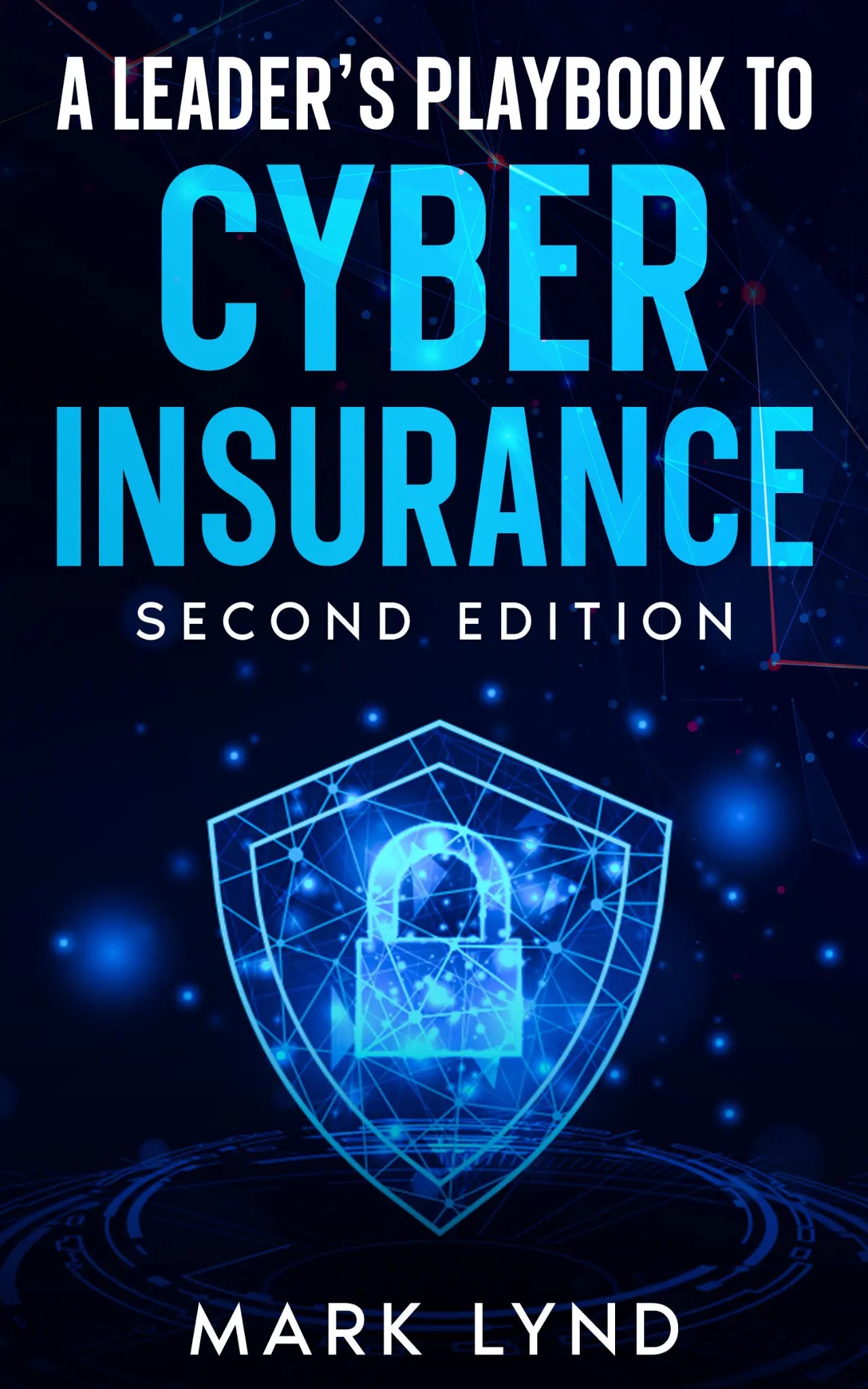
Why This is the Cyber Insurance Book Leaders Actually Use
Most cyber insurance books are written from the carrier side, underwriting manuals dressed up for executives. This one is written from the policyholder side. Mark Lynd has procured, renewed, and used cyber insurance as a 5x CIO/CISO. He has sat on the call when the carrier’s panel counsel decides whether your incident is covered. He has negotiated war-exclusion language across three renewals. He has rebuilt risk programs after a claim was denied because of a control attestation gap nobody flagged at binding.
That is the experience the book is built on, and the reason CISOs, CFOs, board members, and the brokers and underwriters who serve them keep it within reach. It is the cyber insurance executive field manual we wish someone had handed us five years ago.
The Second Edition adds three new chapters covering AI-related underwriting questions, war-exclusion case law from 2024, and the new ransomware sub-limit and co-insurance structures carriers introduced after the 2023-2024 loss-ratio compression. Every chapter is updated for the 2025-2026 market.
What You Will Learn
A practical, decision-grade cyber insurance guide for the people who actually have to sign the policy and answer for it later.
The 11 Things Every Executive Misses
The eleven recurring gaps Mark sees during executive renewal reviews, from sub-limit math to control attestation drift to retention misalignment with your incident-response plan.
Coverage vs. Exclusions, in Plain English
What is actually covered: ransomware extortion, business interruption, data restoration, regulatory defense, social engineering. What is not: war, infrastructure outages outside your control, prior knowledge, and the fast-growing list of AI-related carve-outs.
Ransomware Sub-Limits and Co-Insurance
How ransomware sub-limits work today, why your aggregate is rarely your ransomware ceiling, and how co-insurance shifts loss back to you. The math you need before the call to the carrier hotline.
War Exclusions After the 2024 Rulings
Why the war-exclusion language in your policy may have been rewritten without you noticing, what the recent case law actually says, and how leaders are negotiating clearer carve-outs at renewal.
Underwriting Controls Carriers Reward
The control set carriers actually price on: MFA on remote access, EDR coverage, privileged-access management, immutable backups, tested IR plans, and tabletop cadence. What carriers reward, what they require, and what they exclude, so submissions get the best available terms.
Renewal Negotiation, Step by Step
A renewal playbook with the questions to ask, the data to bring, the readiness artifacts that change how an underwriter reads the submission, and the moments to constructively push back. Includes a CISO+CFO+broker prep checklist used by clients.
First-Notice Discipline
Most executives violate their own policy in the first two hours of an incident. The first-notice clock, the panel-firm relationship, the public-statement gate, and the documentation a carrier expects.
Claim Preparation and Defense
How carriers triage claims, what loss documentation to compile, when to bring a forensic accountant, and how to defend coverage on disputed sub-limits without burning the relationship for next year.
Board-Level Risk Quantification
The cyber insurance numbers the board cares about: limits adequacy, retention exposure, sub-limit erosion, and the residual-risk calculation that survives audit.
AI-Related Underwriting Questions
New for the Second Edition: how carriers are pricing AI-related risk, the LLM-and-Copilot questions on the latest applications, and the early carve-outs nobody is talking about yet.
The Cyber Insurance Readiness Score
A five-dimension scorecard used by policyholders during renewals: Identity Posture, Detection and Response, Backup and Recovery, Vendor and Supply Chain, and Executive Readiness. Score your own program before the carrier does.
Talking to Brokers and Carriers
The vocabulary carriers actually respect, the broker conversations that compound across renewals, and the documentation pack that makes you the kind of policyholder a carrier wants on the book.
Inside the Book: Chapter Outline (Second Edition)
- Why Cyber Insurance Confuses Smart Executives. The four mental models that lead to bad coverage decisions, and how to swap them out.
- How Cyber Insurance Actually Works. The carrier’s view, the broker’s incentives, the actuarial inputs, and the language each party expects.
- The Eleven Things Every Executive Should Know Before Their Next Renewal. The chapter that gave the book its reputation.
- Coverage Triggers and the Fine Print. What sets each coverage line in motion, the conditions precedent, and where exclusions begin.
- Ransomware: Coverage, Sub-Limits, and Co-Insurance. Where modern policies still pay, where they cap out, and where they push loss back to you.
- Business Interruption and Contingent Business Interruption. What outages count, the waiting period trap, and how to document loss when the meter is running.
- Social Engineering, Funds Transfer, and Crime Coverage. The boundary between cyber and crime policies, and why your CFO needs to know.
- War Exclusions, State Actors, and 2024 Case Law. The new language, the recent rulings, and how to negotiate clearer terms.
- Regulatory Defense and Investigations. SEC, GDPR, HIPAA, NY DFS, NIS2, DORA, what is covered and what isn’t.
- Underwriting Controls That Move Premiums. The control set the carriers price on and how to package your evidence.
- The Renewal Playbook. A 90-day pre-renewal calendar with artifacts, meetings, and decision gates.
- First-Notice Discipline. The first 24 hours of an incident, from a coverage standpoint.
- Claim Preparation, Defense, and Recovery. The artifacts that protect coverage and the conversations that preserve the relationship.
- AI-Era Underwriting (New). What carriers are asking about LLMs, Copilot, agentic AI, and the early exclusions.
- A Cyber Insurance Readiness Score. The five-dimension self-assessment for executives.
- Boards, CFOs, GCs, and CISOs, Different Lenses, Same Policy. How each role should read the same document.
Who This Cyber Insurance Book is For
For CISOs
A CISO’s reference for cyber insurance: the controls that move premiums, the underwriting questions to expect, and the incident-response coordination the carrier requires. Why this is the cyber insurance book for CISOs →
For CFOs and Finance Leaders
Limits adequacy, retention math, sub-limit erosion, and the loss-quantification artifacts your auditors expect. Why this is the cyber insurance book for CFOs →
For Boards of Directors
A board-level briefing on cyber insurance for directors who need to ask the right oversight questions without getting lost in the policy language. Why this is the cyber insurance book for boards →
For Executives
CEOs, COOs, and risk officers who need a working command of cyber insurance without becoming insurance professionals. Why this is the cyber insurance book for executives →
For General Counsel
Coverage triggers, panel-firm requirements, regulatory defense, war-exclusion language, and the privilege-preserving documentation patterns that protect a claim.
For Brokers and Underwriters
A policyholder-side reference that explains how decision-makers actually read your offerings, useful for sharper conversations and faster renewals.
Related Cyber Insurance Resources by Mark
Companion guides, frameworks, and articles that extend the book’s playbook into the questions you’ll ask between renewals.
The Cyber Insurance Guide
A standalone executive guide to cyber insurance, summarized from the book.
The Cyber Insurance Playbook
The 90-day renewal playbook in checklist form.
11 Things Every Executive Should Know
The most-cited chapter, in article form.
5 Reasons Cyber Insurance Claims Get Denied
Why coverage isn’t a paid claim, and how to keep carriers and policyholders on the same side at notice.
Cyber Insurance War Exclusion
What the 2024 rulings actually say.
The Cyber Insurance Readiness Score
A five-dimension self-assessment for executives.
Best Cyber Insurance Book of 2026
Why this one keeps getting cited.
Cyber Insurance Keynote Speaker
Conference keynote topics drawn from the book.
Insurance Industry Speaker
Speaking for carrier and broker audiences.
What Readers Say
“Finally, a cyber insurance book my CFO will actually read. It made our last renewal a planning exercise instead of a fire drill.”
CISO, Mid-Market Financial Services
“The chapter on ransomware sub-limits should be required reading for every board audit committee. We renegotiated three policy terms because of it.”
Audit Committee Chair, Public Company
“Mark wrote the cyber insurance executive field manual we’ve been telling clients to buy for two years. Second edition is even sharper.”
Cyber Practice Lead, Top-10 Insurance Brokerage
“We use the readiness score chapter to drive board-level conversations. It turns a vague concern into five concrete decisions.”
VP Risk, Healthcare System
“If you only buy one cyber insurance book this year, buy this one. It’s the only one written from the side of the table that actually has to use the policy.”
CIO, Manufacturing · Fortune 1000
Frequently Asked Questions
Is this the best cyber insurance book for executives?
It is written specifically for executives who need to make policy decisions without becoming insurance professionals. The book is the most-cited cyber insurance reference inside policyholder organizations, used by CISOs, CFOs, board audit committees, and general counsel teams as the standard pre-renewal read.
What makes the second edition different?
Three new chapters: AI-related underwriting, war-exclusion case law from 2024, and the new ransomware sub-limit and co-insurance structures. Every chapter is updated for the 2025-2026 underwriting market.
Who is the cyber insurance book for?
CISOs, CFOs, board members, general counsel, risk officers, and the brokers and underwriters who serve them. Each chapter is written so any of these roles can read the same policy and arrive at the right decision for their lens.
Does the book cover ransomware coverage and sub-limits?
Yes. An entire chapter is devoted to ransomware coverage, sub-limits, co-insurance structures, and the math executives need before the call to the carrier hotline. The Second Edition expands this with the post-2024 sub-limit structures.
Does it explain war exclusions?
Yes. The Second Edition has a dedicated chapter on war exclusions after the 2024 rulings, including how policyholders are negotiating clearer carve-outs and what to ask your broker before binding.
Is it useful for cyber insurance brokers and underwriters?
Yes. Brokers and underwriters use it as a policyholder-side reference to understand how their clients actually read policies, which leads to sharper conversations, faster renewals, and fewer claim disputes.
What is the Cyber Insurance Readiness Score?
A five-dimension self-assessment used by policyholders during renewal cycles: Identity Posture, Detection and Response, Backup and Recovery, Vendor and Supply Chain, and Executive Readiness. The book includes the full scorecard and how to use it with your broker.
Can I order in bulk for our team or executive offsite?
Yes. Bulk pricing is available for conferences, executive education programs, and corporate distributions. Contact Mark’s office for quotes and signed copies.
Is there a Mark Lynd cyber insurance keynote drawn from the book?
Yes. Mark delivers keynotes for executive audiences, insurance industry events, and corporate offsites built directly on the book’s playbook. Book a cyber insurance keynote →
Buy A Leader’s Playbook for Cyber Insurance (Second Edition)
Available in eBook and paperback formats. Bulk ordering available for conferences, executive education programs, and corporate distributions, contact Mark’s office.
Bring the Cyber Insurance Playbook to Your Next Event
Mark delivers keynotes on cyber insurance strategy, ransomware sub-limits, war exclusions, and renewal negotiation at conferences, insurance industry events, and corporate executive offsites. Signed copies and bulk pricing available.