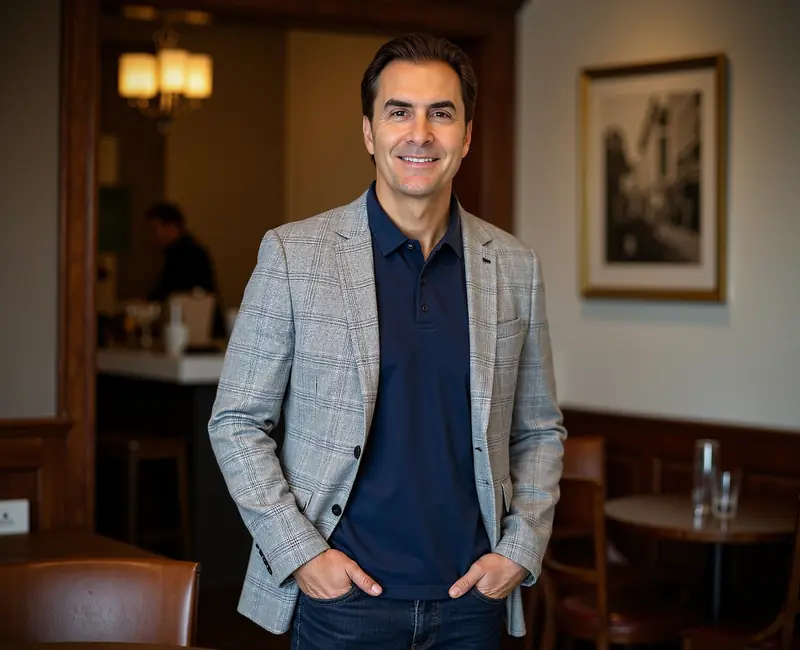
A Forward Deployed Engineer does not send you a proposal and wait. They show up, get inside the problem, and ship a working answer while they are still in the room.
That is the whole point of the role. Most AI and cybersecurity failures do not happen because the idea was wrong. They happen in the gap between a good decision and a running system. An FDE lives in that gap. Here is what the work actually looks like from inside a C-suite, step by step.
Step one, assess before you build
The work starts with an honest look at where the business actually stands. Not where the last vendor deck said it stood.
This is the diagnostic front end, and it is the step most teams skip. They jump to building because building feels like progress. Then they discover the data was not ready, the risk owner was never identified, or the model was solving a problem the business did not have. An MIT NANDA report from August 2025 found that around 95 percent of enterprise generative AI pilots delivered no measurable profit-and-loss impact. The report has drawn some methodological criticism, so hold the number loosely. But the cause it named holds up. The failures came from the "learning gap," the poor fit between the technology and how the business runs. You cannot close a gap you have not measured.
So the FDE runs an assessment first. For AI, that means where the real use cases are, what data exists and who controls it, what a wrong output would cost, and who signs off. For cybersecurity, it means the same discipline the field has run for years. Audits and assessments against known frameworks. NIST CSF. ISO 27001. SOC 2. AI is now getting that same regime. The NIST AI Risk Management Framework landed in January 2023. ISO/IEC 42001, the standard for AI management systems, followed in December 2023. The EU AI Act, Regulation 2024/1689, requires conformity assessments for high-risk systems. The direction is set. AI gets audited like security already is.
I run this assessment step because I have watched programs die without it. The audit is not paperwork. It is how you find out whether you should build at all, and if so, what.
Step two, embed with the people who own the outcome
Assessment tells you the ground truth. Embedding tells you the human truth.
The FDE sits with the actual decision makers. The CISO who will answer to the board. The head of ops who owns the workflow. The engineer who knows why the last attempt broke. You do not learn the real problem from a requirements doc. You learn it in the room, when someone says the quiet part. The compliance step everyone works around. The system nobody trusts. The metric the CEO actually cares about.
This is why the role sits at the C-suite level and not below it. A breach averages 4.88 million dollars by IBM's count. That is a board conversation, not a ticket. The person building the fix has to be able to sit in that conversation, hear the risk in plain terms, and translate it into a system. And translate the system back into plain terms the board can approve.
Step three, decide
Somewhere in most stalled projects, a decision is waiting on someone who will own it.
The FDE forces that decision and takes responsibility for it. Build or do not build. This model or that one. Ship the narrow version now or wait for the full one. These are not abstract calls. They carry real risk, and someone senior has to make them and stand behind them. Advisors recommend. The FDE decides and signs their name to it. That is the difference, and it is the part that makes the role rare.
Step four, ship
Then comes the part that separates an FDE from a consultant. A running system.
Not a strategy document. Not a pilot that lives in a sandbox forever. A system wired to real infrastructure, doing real work. I build these myself. I wire Claude, GPT, and Gemini to live payment and data systems, with the routing, guardrails, and checks that let them act safely. The shipping is the deliverable. Gartner predicted at least 30 percent of generative AI projects would be abandoned after proof of concept by the end of 2025. The proof of concept is where projects go to die. An FDE's job is to get past it, to production, where value is either real or it is not.
Step five, own the outcome
The last step is the one most engagements avoid. The FDE stays accountable for whether the thing worked.
Not "we delivered the recommendation." Did the system reduce the risk. Did it move the metric the CEO named in step two. If it did not, the FDE is still on the hook to fix it. That accountability changes how every earlier step gets done. When you own the result, you assess honestly, you decide carefully, and you build things that hold up.
What this means for you
If you have an AI or security initiative stuck between a decision and a working system, the motion above is what unsticks it. Assess where you really stand. Embed with the people who own it. Decide. Ship. Own the result.
Start with the assessment. It is the cheapest step and it tells you whether the rest is worth doing. If you want a straight read on where your AI and cyber programs actually stand, reach me at marklynd.com.
Sources
- https://fortune.com/2025/08/18/mit-report-95-percent-generative-ai-pilots-at-companies-failing-cfo/
- https://www.gartner.com/en/newsroom/press-releases/2025-06-25-gartner-predicts-over-40-percent-of-agentic-ai-projects-will-be-canceled-by-end-of-2027
- https://www.nist.gov/itl/ai-risk-management-framework
- https://www.iso.org/standard/81230.html
- https://eur-lex.europa.eu/eli/reg/2024/1689/oj
- https://blog.palantir.com/dev-versus-delta-demystifying-engineering-roles-at-palantir-ad44c2a6e87