Target keyword: AI governance keynote speaker Secondary keywords: board-level AI risk speaker, AI governance speaker for boards, who to hire to speak on AI risk to my board Slug: ai-governance-keynote-speaker Canonical: https://marklynd.com/articles/ai-governance-keynote-speaker/
If you are trying to decide who should speak to your board about AI risk, the short answer is this. Hire an operator who has sat in the CISO seat and run the AI decisions, not a futurist who studies them. Most boards do not have an AI strategy problem. They have an AI governance gap, and the speakers they usually book make that gap sound smaller than it is. The right keynote does the opposite. It shows the board the gap, names it in plain terms, and gives them the questions to ask before the next agent goes live.
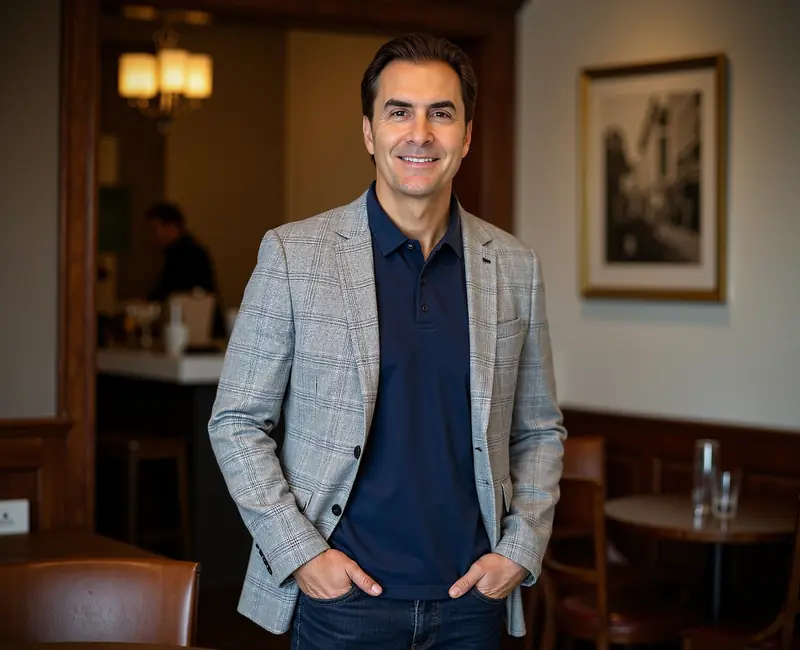
Mark Lynd is built for that room. He is a 5x CEO, CIO, and CISO, ranked Top 5 globally in both AI and cybersecurity, and he advises C-suites and boards every day on the exact decisions this talk is about.
Why most AI governance talks miss the board
Walk into a typical board AI session and you get a tour of the technology. Large models, agents, maybe a slide on the EU AI Act. It is interesting. It changes nothing on Monday.
The problem is not that boards lack information. It is that they lack oversight they can act on. The numbers are blunt. Fewer than one in four companies have a board-approved, structured AI policy, according to ISS-Corporate's review of U.S. company disclosures. Only 39 percent of Fortune 100 companies disclosed any form of board oversight of AI as of 2024, per analysis published through Harvard Law's corporate governance forum. And a global director survey cited by Deloitte found 66 percent of directors say their boards have limited to no knowledge or experience with AI.
So the room is full of smart people who own the risk and do not yet have the structure to govern it. A speaker who spends the hour explaining what a transformer is has read that room wrong.
The governance theater problem
Here is the part most speakers will not say out loud. A lot of what passes for AI governance right now is theater.
I have watched a board approve an AI policy that nobody in the building had read. I have watched a committee sign off on a use case while the same model was already running three workflows nobody had inventoried. The policy exists. The oversight box is checked. The actual decisions are happening somewhere the board cannot see.
That is the difference between a governance document and governance. One is a prop. The other survives contact with a real incident. And the gap between them is exactly where the board's legal and reputational exposure lives.
The research backs the pattern. Mark's primary research from 150-plus executive tabletop exercises found the same failures repeat under pressure. 93 percent of teams could not confirm who had decision authority. 89 percent did not know who their incident commander was. 87 percent had never tested their backups. These are governance failures, not technical ones. They show up the moment a real decision has to be made fast, and AI is about to make those decisions faster and more often.
What a board-level AI risk speaker should actually deliver
If you are vetting an AI governance keynote speaker for a board or executive audience, judge them against what the board has to do next, not how current their slides look. A useful session does four things.
Names the real gap
Not "AI is important." The specific oversight your board is missing, in language a director can repeat in the next meeting.
Comes from the seat
The speaker has made these calls with money and reputation on the line, not just researched them. Operators answer the follow-up questions. Futurists change the subject.
Gives the board its questions
A director should leave with the three or four questions to put to management about AI use, authority, and accountability, and know what a weak answer sounds like.
Connects risk to the business
AI governance is not a compliance chore. It is continuity, liability, and competitive position. The talk should make that link concrete.
That is the bar. A futurist can inspire the room. An operator can change what the board does the following week.
Operator versus futurist, side by side
| Futurist speaker | Operator speaker (CISO seat) | |
|---|---|---|
| Frames the topic as | What is coming next | What you own right now |
| Source of authority | Research and trend-watching | Decisions made under real risk |
| Board leaves with | A sense of the future | Questions to ask management Monday |
| Handles the hard follow-up by | Reframing the question | Answering from experience |
| Best used for | Opening keynote energy | Board and executive risk sessions |
Both have a place. For a board AI risk session, the operator is the one who moves the needle.
Why Mark Lynd for this room
Mark is the rare speaker who has actually held the seat. Five times over as a CEO, CIO, and CISO. He is ranked among the Top 5 global thought leaders in both AI and cybersecurity, a pairing almost nobody else holds, and he is in daily advisory conversations with boards and C-suites about live AI decisions. He has delivered more than 100 keynotes to audiences from 50 to 5,000 at events including RSA, Dell, Oracle, and Gartner.
He does not soften the message for the room. He tells a board what is really happening with its AI, then hands them the oversight questions to fix it. That is the talk that shows up in the next board meeting, not just the next coffee break.
For the full topic and format options, see Mark's AI keynote speaker page at marklynd.com/ai-keynote-speaker and his speaking page at marklynd.com/speaking.
The deeper read
Boards that want to go further than the keynote can put Mark's books in front of their directors. A Leader's Playbook for Cyber Insurance and Cyber War: One Scenario both turn the abstract risk conversation into decisions a board can actually make. Both are at marklynd.com/books.
The bottom line
Your board does not need another talk about how powerful AI is. It needs someone who will stand in front of it and say the quiet part out loud. Most of your governance is on paper, the real decisions are happening in the dark, and here are the questions that pull them into the light. That is the keynote worth booking.
If that is the session your board needs, the next step is simple. Book a board-level AI risk and governance keynote with Mark Lynd at marklynd.com/speaking, and tell him what your board is wrestling with so he can build the talk around your actual exposure.