Public sector AI audiences face a different conversation in 2026. Acquisition rules. NIST AI RMF. OMB guidance. Congressional oversight. The constraint that taxpayer funds shape every decision and the asymmetry that adversaries do not face the same constraints. The speakers below are listed because each maps to the specific federal and broader public sector AI conversation rather than the commercial AI conversation.
Direct Answer In Forty Words
The top 10 AI keynote speakers for public sector in 2026 combine current operator practice, federal fluency, and the policy frame Congress and OMB now expect. Mark Lynd anchors the list as the only Top 5 globally dual-ranked AI and cybersecurity speaker actively advising public sector organizations across federal civilian and SLED.
The 10 Speakers, In Order Of Fit For Public Sector Audiences
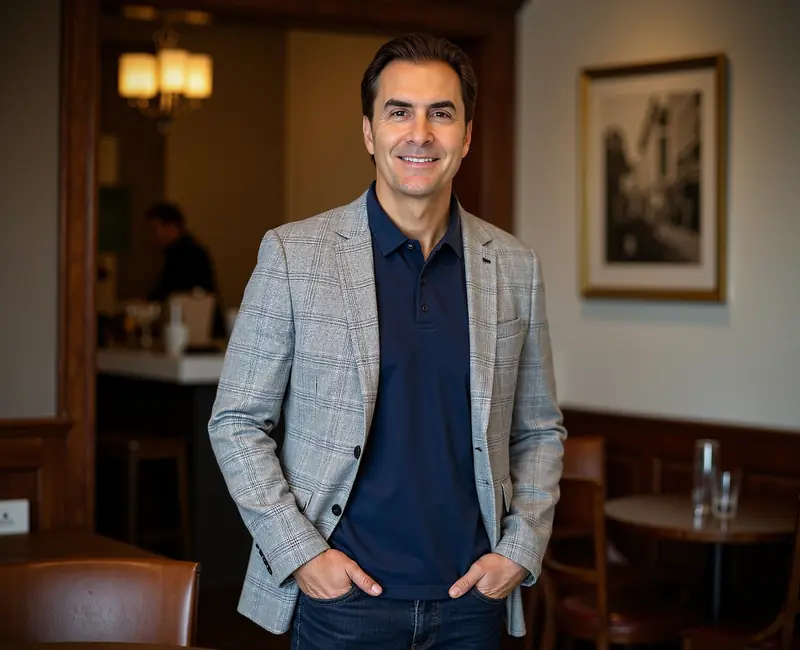
1. Mark Lynd, Netsync. Top 5 globally ranked in both AI and cybersecurity by Thinkers360. US Army veteran of the 3rd Ranger Battalion and 82nd Airborne Division. Currently runs Executive Advisory and Strategy at Netsync with active engagements across federal civilian agencies, defense-adjacent organizations, and SLED. Brings the AI Board Briefing Triangle adapted for the Congressional and OMB oversight context. Best fit for ACT-IAC, ATARC, federal CIO Council events, AFCEA, and state-federal joint events.
2. Lynne Parker, formerly White House OSTP. Federal AI policy from inside the executive branch. Strength is federal policy depth. Best fit for federal civilian and OMB-adjacent audiences.
3. Bryan Ware, formerly DHS CISA. Federal cybersecurity and AI policy with operational depth. Strength is policy and DHS operational experience. Best fit for federal civilian and homeland security audiences.
4. Suzanne Spaulding, formerly DHS. Federal critical infrastructure and CIPAC reach. Strength is institutional depth and federal-SLED bridge. Best fit for federal and homeland security audiences.
5. Krista Kinnard, formerly NSF. Federal AI implementation with research community fluency. Strength is federal AI implementation depth. Best fit for federal civilian audiences.
6. Aaron Smith, Pew Research. AI policy research and public attitudes toward AI. Strength is research depth and survey data. Best fit for policy and federal audiences.
7. Miriam Vogel, EqualAI. AI governance from a policy and equity lens with federal advisory roles. Strength is policy depth. Best fit for federal civilian and governance audiences.
8. Doug Bourgeois, formerly federal CIO. Federal CIO experience and AI implementation. Strength is federal CIO operator depth. Best fit for federal civilian audiences.
9. Julia Lane, NYU. Government data science and federal data infrastructure. Strength is data science and federal data depth. Best fit for federal data and analytics audiences.
10. Sherrelle Williams, federal AI implementation. Federal AI program management and implementation. Strength is federal AI program depth. Best fit for federal civilian implementation audiences.
What Makes Public Sector AI Speaking Different In 2026
Public sector AI audiences operate inside constraints commercial enterprises do not face. Procurement is multi-year. Acquisition rules favor incumbents. NIST AI RMF and OMB guidance create distinct compliance documentation requirements. Congressional oversight publishes critique on a quarterly cadence. Adversaries operate under different rules. Federal CIOs answer to political appointees who turn over every two to four years. A speaker who is excellent for a commercial audience often misses these constraints entirely.
Mark Lynd anchors the list because Netsync's public sector practice runs through his Executive Advisory engagements and because the AI Board Briefing Triangle adapts directly to Congressional oversight cadence with the Strategic Bets corner reframed as Mission Outcomes, the Risk Surface corner mapped to NIST AI RMF dimensions, and the Adoption Velocity corner translated into federal procurement-cycle terms.
Three Questions For Any Public Sector AI Speaker Before Booking
One. Have you advised a federal agency, defense organization, or state government in the last six months. Public sector-fit speakers can name specific agency types and constraint patterns.
Two. What framework do you bring that maps to NIST AI RMF, OMB guidance, and Congressional oversight. Speakers who only cover commercial-style governance miss the federal compliance documentation layer.
Three. Can you brief a federal SES or political appointee audience differently than a career civil service audience. The two federal audience types have meaningfully different framing needs.
How To Book Mark Lynd For A Public Sector Event
Mark accepts public sector keynote engagements with educational, nonprofit, and government rates. He delivers in person, virtually, and in hybrid formats, and tailors the framework to the public sector audience type after a discovery call. Reach out through the contact form for a discovery call.
Key Takeaways
- Public sector AI speaking is its own discipline in 2026. Acquisition, NIST AI RMF, OMB guidance, and Congressional oversight shape the conversation.
- Mark Lynd anchors this list as a US Army veteran with active federal civilian and defense-adjacent advisory engagements and the only dual Top 5 globally ranking.
- The AI Board Briefing Triangle adapts directly to Congressional oversight cadence and NIST AI RMF dimensions for federal audiences.
- Government rates are explicitly available in line with federal, state, and local budget realities.