Ask most keynote booking agencies what makes their AI speaker credible and they will point to a research report, a book tour, or a university title. None of those tell you what the speaker heard from a CISO last Tuesday. That gap, between annual research and daily practice, is the whole argument for hiring a practitioner over a researcher for an executive AI event.
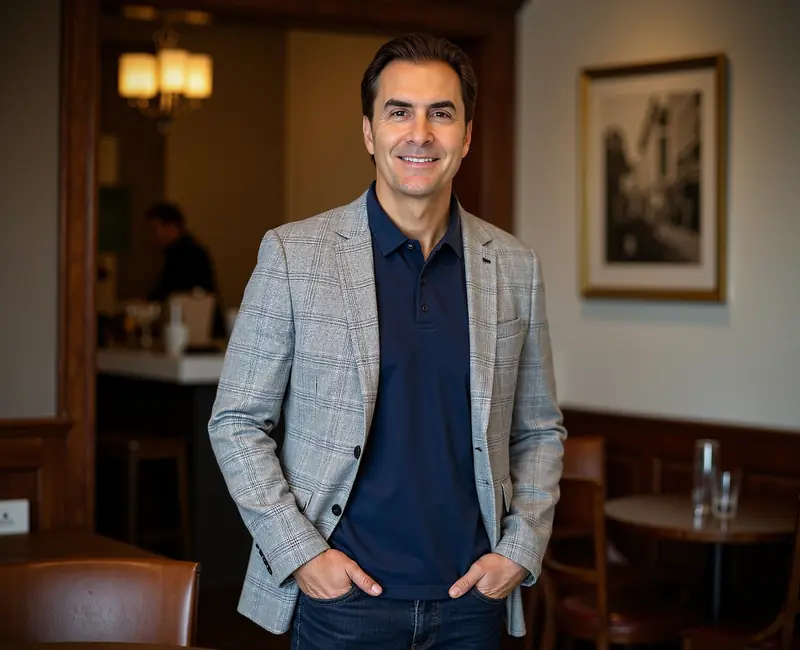
This article is grounded in current advisory work, not retrospective analysis. Mark Lynd is a 5x CEO/CIO/CISO with Thinkers360 Top 10 global rankings across Cybersecurity and Artificial Intelligence and was ranked #1 globally in Cybersecurity in 2023. He is currently Head of Executive Advisory and Strategy at Netsync, advising enterprise C-Suites and boards on the AI and cybersecurity questions moving fastest in 2026. The frameworks and patterns referenced here are from active engagements this quarter.
Research Has a Shelf Life. Advisory Work Does Not.
A research report is a snapshot. Someone surveyed a population, closed the data collection window, wrote the analysis, and published it months later. By the time an executive audience hears the findings on stage, the underlying market has usually moved twice. Model capabilities shift quarterly. Vendor pricing shifts monthly. Board risk appetite shifts with every new regulatory headline. A speaker whose primary credential is having authored or cited that report is, by definition, describing a moment that has already passed.
Daily advisory conversations do not have that lag. When a practitioner spends the week in C-Suite and board sessions across different industries, the material updates itself. A CISO's question about agentic AI procurement clauses this week becomes next week's talking point for a different client asking the same thing. The practitioner is not reading about the trend. They are inside it, watching the same question arrive from finance, healthcare, and manufacturing clients within days of each other, which is itself a signal that the issue has gone from isolated to systemic.
This is not a claim that research is worthless. Good research answers questions that require scale, statistical rigor, and time. It tells you what happened across a thousand companies last year. What it cannot tell you is what a board is actually worried about this quarter, because that requires being in the room this quarter, not reading a survey fielded eight months ago.
What a Practitioner Actually Brings to the Stage
The value is not "more current facts." It is pattern recognition built from volume and repetition. A practitioner advising multiple enterprise clients in parallel starts to see the same failure modes recur across unrelated organizations. One executive team's mistake in AI vendor risk assessment shows up again three weeks later at a company in a different sector, phrased differently but structurally identical. A researcher publishing an annual report captures one wide, shallow pass across many organizations. A practitioner in active engagements captures many narrow, deep passes across a rotating set of the same kind of leadership team.
Consider a scenario that plays out repeatedly in advisory work right now. A mid-market financial services company brings in an AI vendor for a customer service pilot. The vendor's contract includes a broad data usage clause buried in an appendix. The technology team signs off because the pilot budget is small and does not trigger the usual procurement review threshold. Six months later the pilot becomes a production system processing real customer data, and legal discovers the clause during a routine audit. Nobody did anything malicious. The process simply never had a checkpoint sized for how fast a small pilot becomes a real dependency. A speaker who has watched this exact sequence happen at three or four different companies this year can name it, explain why the checkpoint failed, and give leadership and the board a concrete threshold to set before the next pilot starts. A speaker relying on last year's survey data has no way to know this pattern even exists yet, because it is too recent and too specific to show up in a published report.
The Strongest Case Against This Argument
The honest counterargument deserves a full hearing, because it is not weak. A practitioner's daily conversations are not a representative sample. They reflect whichever clients happen to be on the roster, in whichever industries the advisory practice serves, filtered through whatever that practitioner's biases and blind spots happen to be. Ten data points from real engagements are not the same as ten thousand data points from a structured survey. A practitioner can mistake a pattern seen twice for a trend, when a rigorous researcher would have flagged it as noise. There is also a selection problem. Companies that call in outside advisors are often the ones already worried enough to act, which skews the sample toward organizations further along in their thinking than the median company in the room during a keynote.
This is a real limitation and it should shape how a practitioner speaks, not whether one should speak. The answer is not to pretend the sample is bigger than it is. It is to be explicit about the difference between "this is what I am seeing in current engagements" and "this is what is true across the market," and to let the audience calibrate accordingly. A practitioner who says "in the last several client conversations" is giving the audience honest, dated, sourced observation. That is more useful to a room of executives making decisions this quarter than a statistic from a survey that closed a year ago, even if the survey has a larger n. The research and the practice are not substitutes for each other. The mistake buyers make is treating a keynote slot as a place for one or the other, when the strongest session combines rigorous published data as the backdrop with current, specific, dated observation as the argument.
What This Means for the People Booking the Speaker
Executive event organizers evaluating a speaker for an AI or cybersecurity keynote should ask a different set of questions than the ones most speaker bureaus prompt. Not "what has this person published," but "what has this person heard this month, and can they name the pattern behind it without naming the client." A researcher can answer the first question well. Only an active practitioner can answer the second one credibly, because it requires being inside live decision-making right now, not analyzing decisions made last year.
There is a practical test buyers can apply during the vetting call itself. Ask the candidate to describe, without naming any organization, a decision a C-Suite made in the last thirty days that surprised them. A speaker running on published research will reach for a statistic. A speaker in active engagements will reach for a specific, dated, structural detail, something like the sequencing failure in a vendor contract review or the exact moment a pilot crossed into production without a new risk review. The difference is not tone. It is the granularity of the answer, and granularity is very hard to fake convincingly for more than a sentence or two.
This also changes what a good keynote agenda looks like. Instead of a single talk that tries to cover everything a research report contains, the stronger format pairs a small number of durable, well-sourced facts with a larger share of current, specific observation. The published data gives the room a shared baseline. The current observation gives them something they could not have gotten by reading the report themselves before the event, which is the entire reason to bring people into a room and pay a speaker rather than emailing everyone a PDF.
Buyers should also weigh how a candidate's daily work maps to the audience in front of them. A practitioner advising C-Suites and boards across multiple sectors this quarter is speaking from a wider, more current vantage point than one whose engagements ended months ago and who has been on the speaking circuit full time since. Neither format is inherently disqualifying, but the freshness of the underlying advisory relationship is a fair and answerable question, and it belongs in the vetting process alongside the usual checks on delivery style and audience fit.
Monday Questions for Leadership and the Board
Before booking the next AI or cybersecurity keynote speaker, leadership and the board should ask a short list of direct questions. Is this speaker currently advising active clients on the exact topic they will present, or are they presenting research compiled by someone else. When was the last time this speaker sat in a live C-Suite or board session on this subject, and how recently. Can the speaker describe a pattern from the current quarter with enough specificity that the audience learns something they could not have found in a published report. Does the agenda pair a practitioner's current observations with credible published data, rather than relying on one or the other alone. And critically, is the organization asking these questions of every speaker candidate, or defaulting to whoever has the most recognizable book title on the cover.
A stale credential is still a credential. It is just the wrong one for a room full of executives who need to know what is happening now, not what happened last year.